
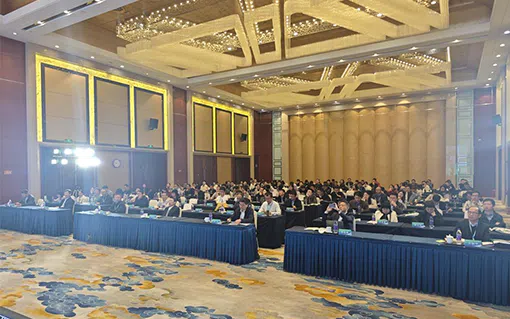
On November 1, the 9th China Symposium on Electric Vehicle Charging, Swapping and Drive Systems was held in Xuchang, Henan, China. Organized by the Electric Vehicle Charging and Swapping Systems and Testing Professional Committee of the Chinese Electrotechnical Society, the event brought together more than 200 experts and scholars from power utilities, universities, research institutes, and other organizations across the country.
Under the two major themes of “Safe Application of High-Power Charging Technologies” and “Flexible and Adaptive Vehicle-Grid Interaction Technologies,” participants engaged in in-depth discussions on the latest technologies, applications, and development trends, exploring new pathways for the coordinated development of electric vehicles and the new power system.
Shandong Jicheng Zhitong New Energy Co., Ltd. was invited to attend the symposium. During the keynote session, Wang Linxian, General Manager of Jicheng Zhitong, delivered a presentation entitled “Design and Application of a V2G System Based on a Micro Energy Router.” The presentation provided an in-depth overview of the company's core technologies and latest achievements in vehicle-grid interaction, attracting considerable attention and discussion among industry professionals.
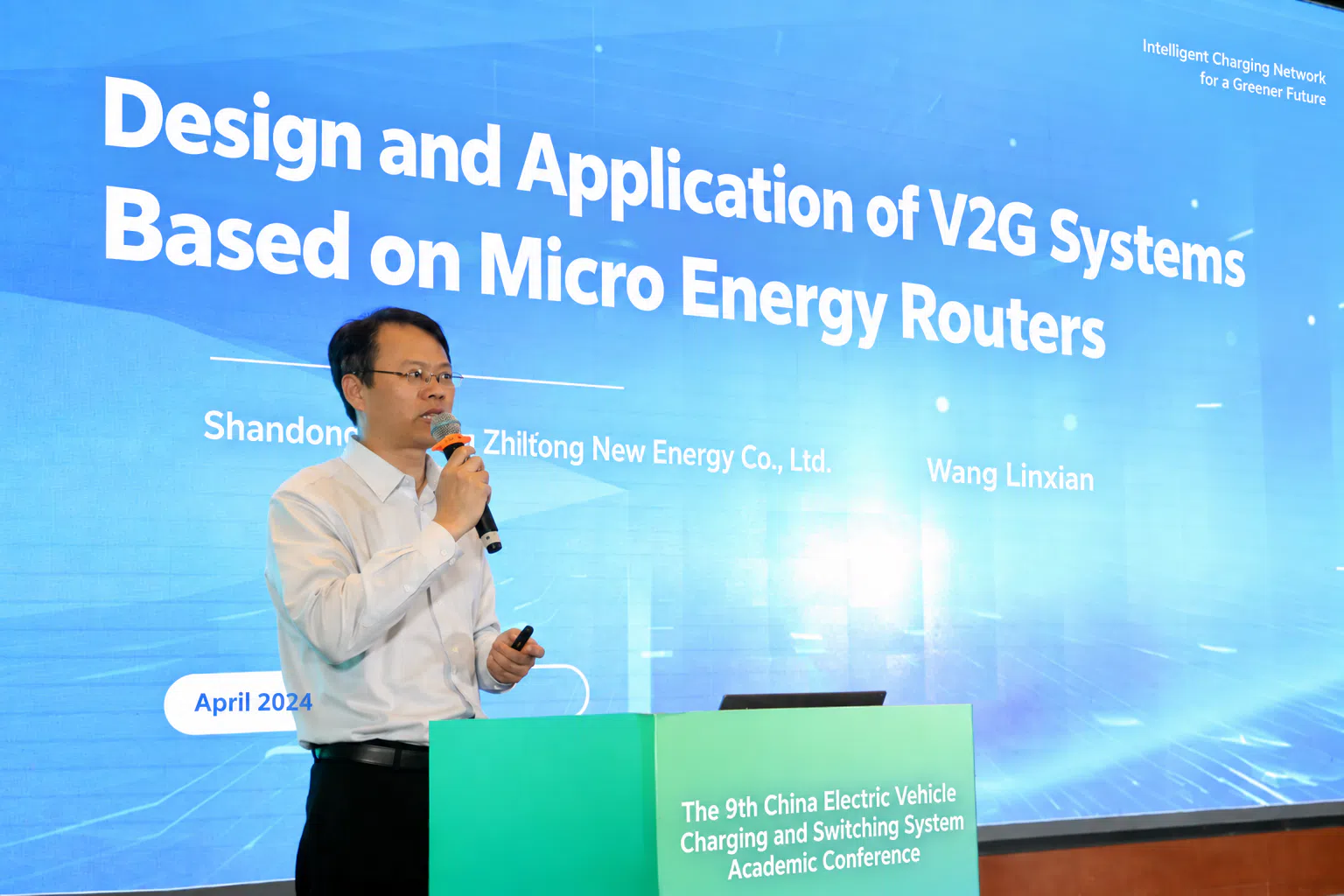
Wang Linxian noted that as China's “Dual Carbon” goals continue to advance, electric vehicles are gradually evolving from conventional electricity consumers into flexible, mobile energy storage units capable of participating in power system regulation.
Jicheng Zhitong's independently developed Micro Energy Router provides a solid technological foundation through a highly integrated system architecture, efficient energy routing capabilities, and intelligent coordinated control. It enables vehicle-grid interaction to move beyond “managed charging” toward two-way V2X interaction, opening up new possibilities for more flexible energy management.
During the presentation, Wang also highlighted the successful demonstration of this technology at the Fuminda MW-level charging and discharging station. By integrating an intelligent power scheduling platform with high-performance energy storage and coordinated control of multiple terminals, the system supports a range of integrated operating scenarios, including vehicle-to-vehicle charging, storage-charging coordination, and flexible load management at distribution transformer areas.
These capabilities help alleviate pressure on the local power grid while improving renewable energy consumption and utilization. The project provides a practical example that can be replicated and scaled for the wider deployment of high-power vehicle-grid interaction systems.
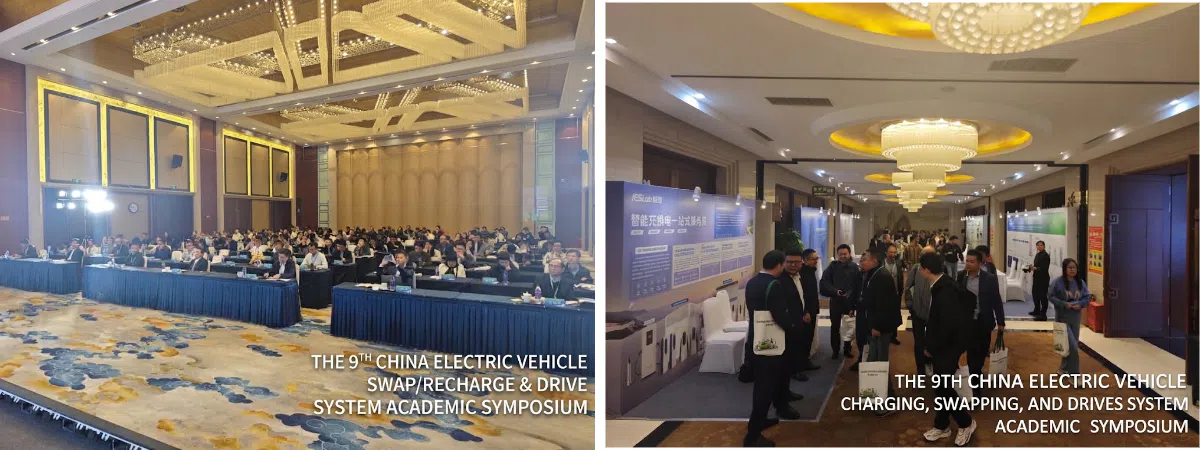
During the symposium, Jicheng Zhitong's product exhibition area also attracted considerable attention from visiting experts and industry representatives. Focusing on high-power charging, V2G system integration, and coordinated PV-storage-charging solutions, the company showcased a range of competitive products and integrated solutions, demonstrating its technological expertise and innovation capabilities in EV charging, energy interaction, and intelligent power management.
Zhao Bo, Chief Engineer of Jicheng Zhitong, also participated in an on-site interview, providing an in-depth explanation of the company's technological roadmap and key strengths in vehicle-grid interaction. His insights sparked extensive discussions and exchanges with industry professionals.
The symposium provided a valuable platform for industry stakeholders to exchange ideas and share the latest technological developments, while also highlighting new directions for the large-scale deployment of vehicle-grid interaction technologies.
Looking ahead, Shandong Jicheng Zhitong will continue to strengthen its R&D efforts in key areas such as energy routers, V2G systems, grid-forming technologies, and safety control. By enabling electric vehicles to become more deeply integrated into the new power system, the company aims to contribute to the development of a cleaner, lower-carbon, safer, and more efficient energy system.

